hdpe liner: Industry Knowledge and Practical Insight in Geosynthetics
is a core containment material within modern geosynthetics engineering, valued for its low permeability, chemical resistance, and long-term durability in demanding environmental and civil infrastructure applications. In real-world projects, it is typically specified as part of integrated geomembrane systems designed to meet both engineering performance targets and regulatory requirements.
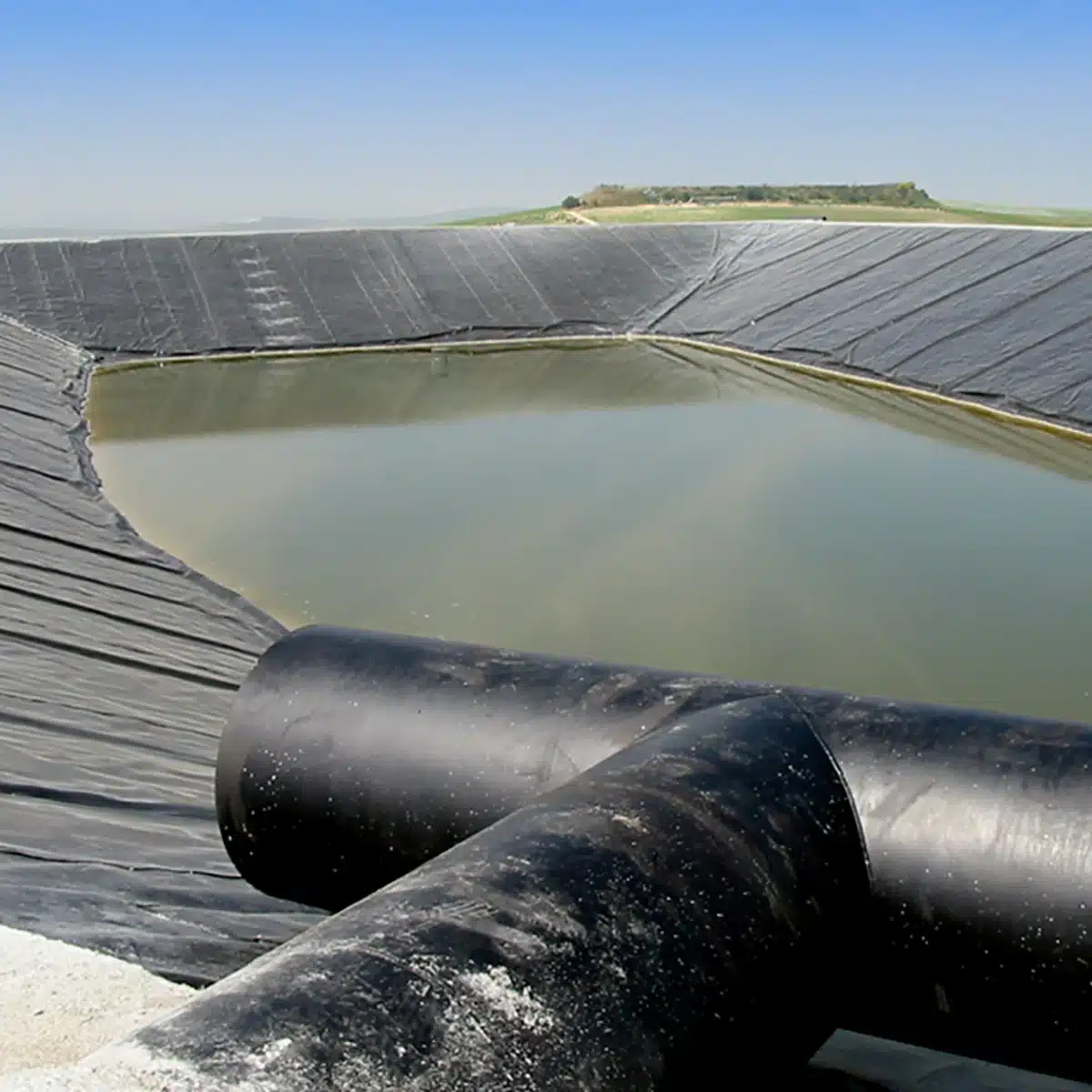
What is an hdpe liner and how is it used in geosynthetics?
In geosynthetics, an hdpe liner refers to a high-density polyethylene geomembrane designed to act as an impermeable barrier. It is widely applied in landfill base liners and caps, mining heap leach pads and tailings ponds, water and wastewater lagoons, and industrial containment systems. Its primary role is to prevent the migration of liquids and contaminants into surrounding soil and groundwater while maintaining stability under load and settlement. In practice, it is often installed as part of complete geomembrane liner systems, where controlled factory production and on-site thermal welding provide consistent, large-area containment performance.
Which engineering properties matter most beyond thickness?
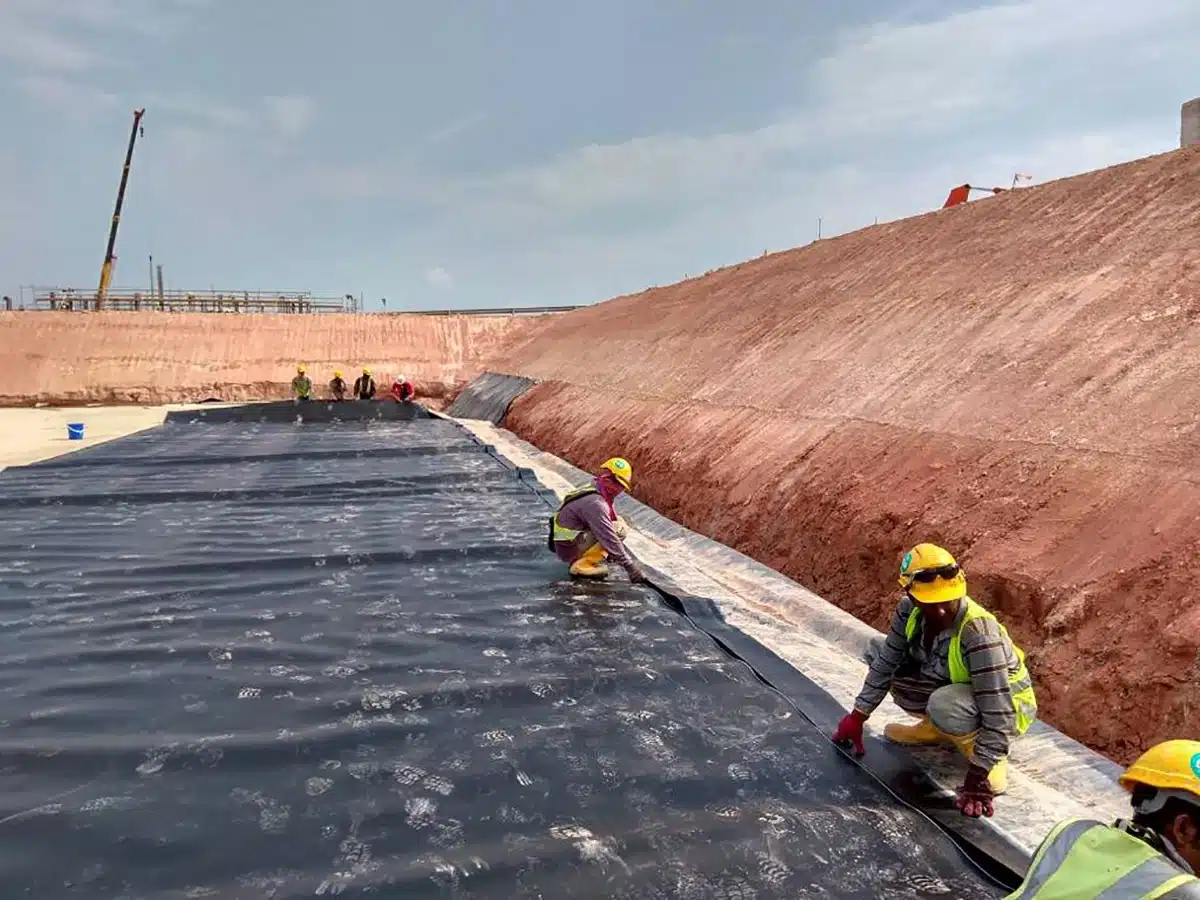
Although thickness is often the most visible parameter, long-term performance depends on a broader set of material and construction factors. Resin quality and density directly influence durability, while tensile strength, tear resistance, and puncture resistance must be compatible with subgrade conditions and installation methods. Oxidative resistance and UV stability are especially important for exposed or long-design-life projects. Seam integrity is another critical factor, as welded joints are typically the most sensitive points in a liner system. From an industry standards perspective, HDPE geomembranes are commonly defined as having a sheet density of ≥ 0.940 g/cm³ (Source: Geosynthetic Institute, GRI-GM13), a benchmark frequently referenced in HDPE geomembrane specifications.
How do regulations influence thickness and design choices?
Regulatory frameworks play a major role in shaping liner design, particularly in environmental containment applications. In municipal solid waste landfills, the environmental risk associated with leakage leads regulators to favor conservative, well-documented liner configurations. As a result, many projects adopt proven minimum thicknesses rather than relying solely on theoretical calculations. A widely cited benchmark is that U.S. landfill guidance commonly specifies a minimum 60-mil HDPE geomembrane for primary containment layers (Source: U.S. EPA, Subtitle D guidance). Designers may then increase thickness or add protective geotextiles and drainage layers depending on subgrade angularity, leachate chemistry, temperature, construction traffic, and service life expectations, often within a broader geosynthetics containment system.
What industry data trends are relevant for owners and engineers?
From a market and planning perspective, demand for geomembrane solutions continues to rise as environmental regulations tighten and infrastructure investment expands. Industry research indicates that the global geomembrane market was valued at approximately USD 1.98 billion in 2023 and is projected to reach about USD 2.85 billion by 2030, with an estimated CAGR of around 5.4% (Source: Grand View Research). This growth trend has shifted attention toward suppliers with strong quality control systems, certified installation teams, and documented CQA procedures. For owners and EPCs, total lifecycle performance and risk reduction increasingly outweigh simple material unit cost, particularly for critical applications such as landfill and mining containment, where proven environmental liner solutions are essential.
In summary, hdpe liner remains a cornerstone material in geosynthetics because it combines reliable barrier performance with well-established standards and regulatory acceptance. Its successful application depends not only on thickness, but also on resin quality, mechanical properties, seam integrity, and disciplined installation under robust QA/QC programs. Supported by strong industry growth data and decades of field performance, this solution continues to be a preferred choice for landfills, mining operations, water management, and industrial containment projects that demand long-term environmental protection and engineering reliability.


Comments
Post a Comment