What Is Geosynthetics: Core Concepts, Markets, and Engineering Applications
The question what is geosynthetics sits at the center of modern civil engineering because these polymer-based materials now support roads, landfills, mines, ports, reservoirs, and slope reinforcement systems worldwide, with market valuation increasing alongside modern infrastructure programs and ESG policy transitions. Modern transportation projects frequently apply geogrids and stabilization systems similar to reinforcement geogrids used for base courses in highways and working platforms, which are detailed in geogrid solutions for road construction available through the corporate technical portfolio. The global geosynthetics market was valued at USD 12.36 billion in 2022 and is projected to reach USD 20.3 billion by 2030 at a 6.4% CAGR (source: Markets and Data, 2023) with historical consumption surpassing 15 billion m² by 2024 (source: Global Market Insights).
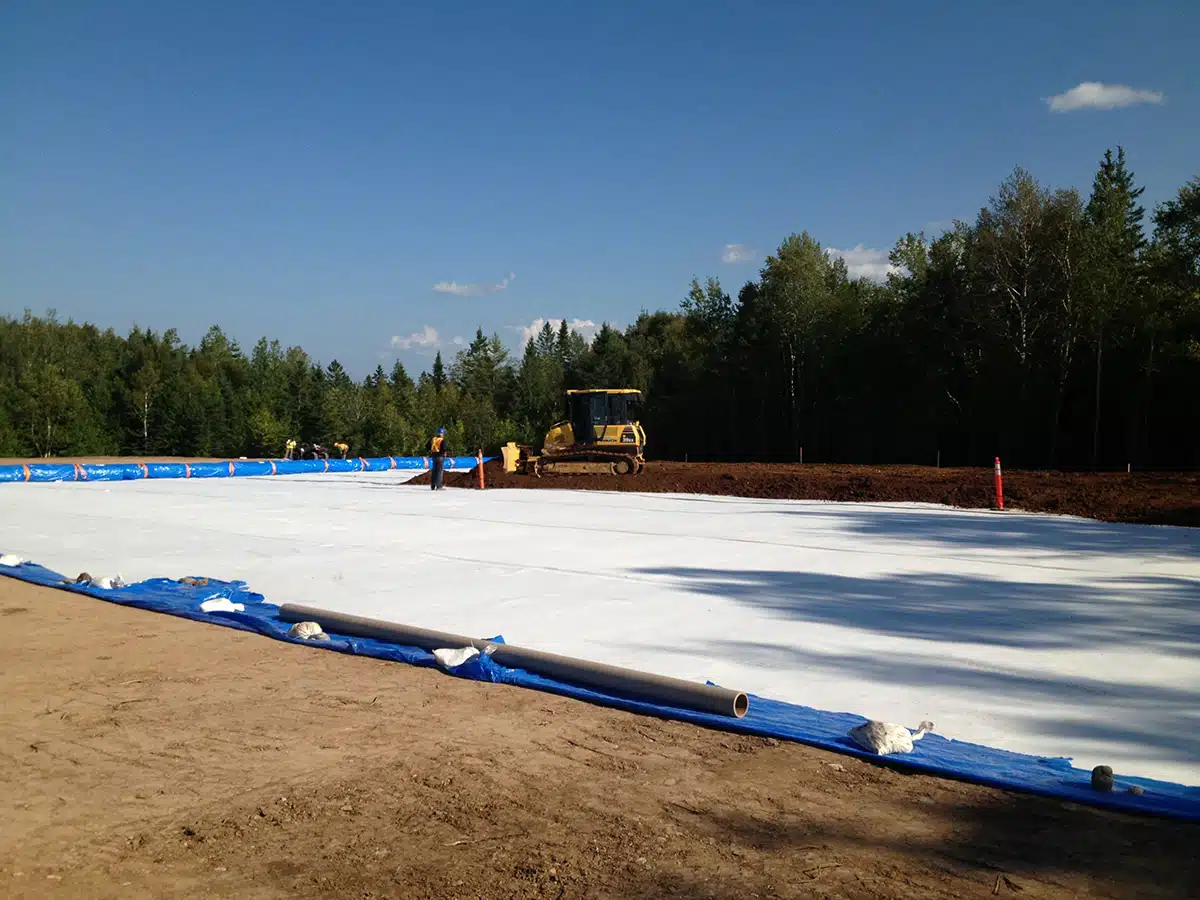
What are geosynthetics and why do engineers use them?
Geosynthetics are polymer-engineered materials used with soil and geomaterials to provide separation, reinforcement, filtration, drainage, barrier, and protection functions in civil and mining infrastructure. Key product families include geotextiles, geomembranes, geogrids, geocells, geonets, drainage geocomposites, and GCLs, with environmental containment systems incorporating HDPE geomembrane liners, known for chemical resistance, durability, and compliance with landfill and heap leach standards.
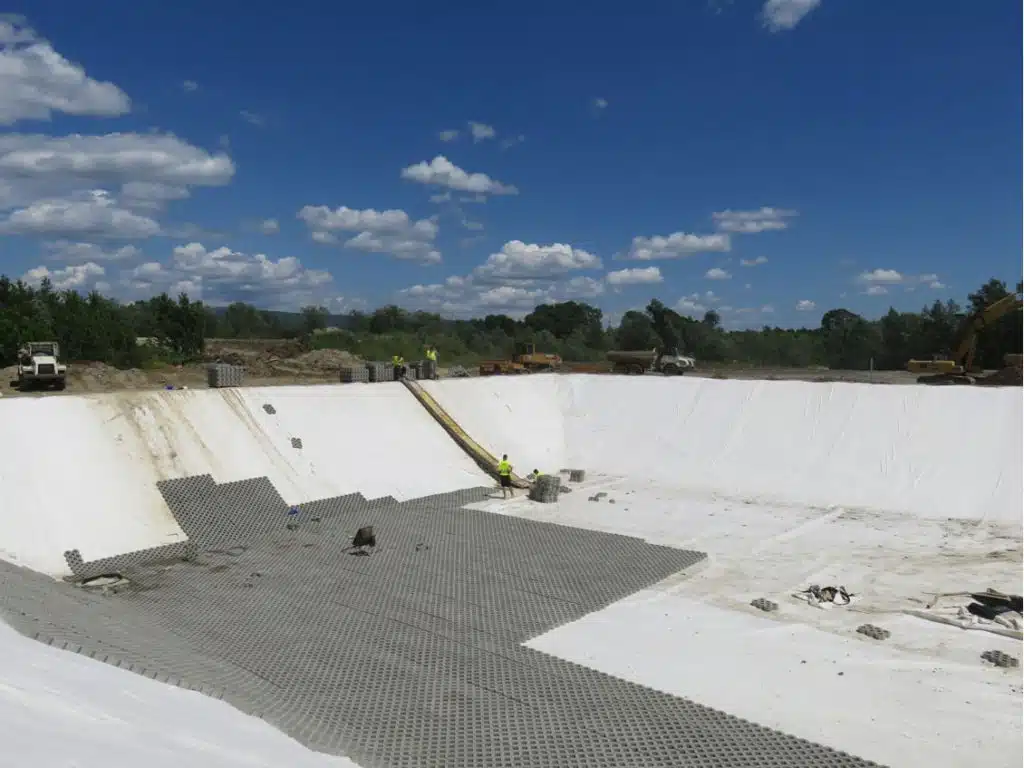
What are the main types of geosynthetics and how do they work?
Woven and nonwoven geotextiles provide filtration and separation, geomembranes provide containment, geogrids and geocells provide reinforcement, geonets and drainage composites provide in-plane drainage, and GCLs deliver hydraulic barrier functions. A technical industry survey identified nine geosynthetic product families deployed across 28 infrastructure sectors, including roads, mining, coastal protection, and brownfield remediation.
Where are geosynthetics used in real-world engineering projects?
Civil and mining sectors use geosynthetics for landfills, reservoirs, reinforced slopes, erosion control, railways, and pavements, with transportation demonstrating strong performance in extended maintenance intervals and lower rutting. A reinforced pavement overlay study reported 32.4% embodied carbon reduction compared to conventional overlays (source: Zornberg et al., 2024). Landfills routinely specify dual-liner systems with geomembrane + GCL barrier configurations to meet compliance and leachate management standards.
How do geosynthetics support sustainability and cost-effective infrastructure delivery?
Carbon audits and LCCA analyses confirm reduced aggregate use, hauling, and site disturbance, while a study showed approximately 16% lower carbon emissions for reinforced pavements (source: Mazurowski, 2022). Analysts forecast market expansion toward USD 37.9 billion by 2030 with 11.5% CAGR (source: Report Ocean, 2025), reinforcing the sector’s strategic relevance across ESG, infrastructure resilience, and long-term asset reliability. Understanding what is geosynthetics therefore connects engineering performance to sustainability, cost efficiency, and regulatory compliance.
Understanding what is geosynthetics links civil engineering performance with sustainability, regulatory compliance, life-cycle efficiency, and carbon-conscious procurement strategies. As infrastructure expands under ESG and decarbonization agendas, geosynthetic materials provide measurable value through reinforce


Comments
Post a Comment