Geogrids in Civil Engineering: Applications, Benefits, and Sustainable Infrastructure Solutions
, railways, slopes, and embankments, geogrids applications in modern civil engineering help extend infrastructure lifespan while supporting sustainable construction. Contractors rely on geogrids to build on soft or unstable foundations efficiently, ensuring long-term durability and environmental compliance.
What Are Geogrids and How Do They Work?
Geogrids are polymer-based geosynthetic materials with an open grid structure that interlocks with soil or aggregate layers. They improve load-bearing capacity, stabilize weak subgrades, and minimize settlement and deformation. Common types include:
- Uniaxial geogrids: High tensile strength in one direction, ideal for retaining walls.
- Biaxial geogrids: Strength in two directions, suitable for roads and embankments.
- Triaxial geogrids: Multi-directional reinforcement, used in complex soil stabilization projects.
By efficiently distributing loads, geogrids allow construction on soft soils with thinner base layers, reducing material usage and overall project costs.
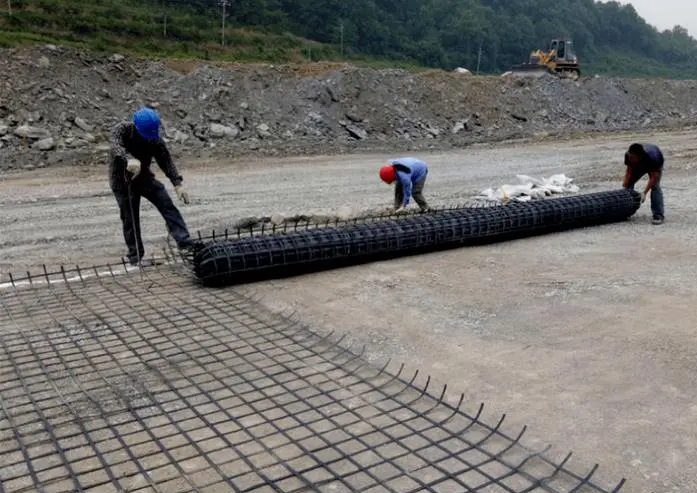
Applications of Geogrids in Civil Engineering
Geogrids are widely applied across infrastructure projects:
- Roads and highways: Strengthen subgrades, reduce pavement failure, and extend road lifespan.
- Railway tracks: Prevent ballast migration, enhance track stability, and reduce maintenance costs.
- Slope reinforcement & retaining walls: Maintain soil integrity and prevent erosion.
- Embankments over soft soils: Enable safer, cost-efficient construction.
Many engineers highlight the advantages of geogrids in sustainable construction projects to justify their use in roads, slopes, and landfill stabilization. Studies show road applications account for ~40% of global geogrid usage, emphasizing their value in modern civil engineering.
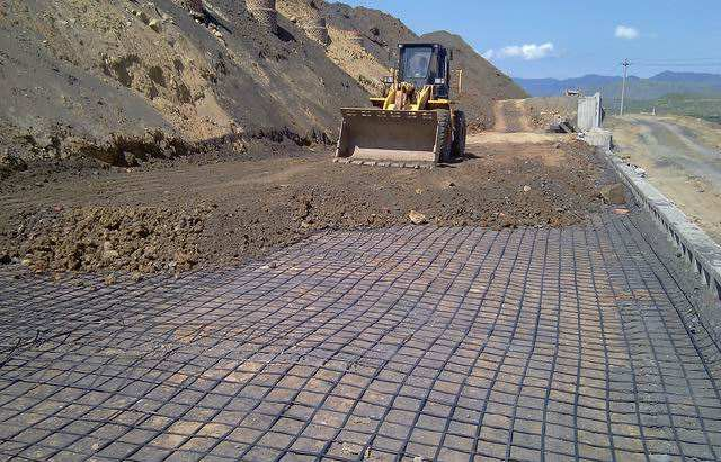
Key Advantages of Geogrids
The main benefits of geogrids include:
- Cost reduction: Reduce aggregate thickness, saving up to 15% in base materials.
- Extended service life: High tensile strength distributes loads, minimizes settlement, and improves durability.
- Sustainability: Supports carbon emission reduction in road projects by up to 85 tCO₂e per km.
- Versatility: Compatible with geotextiles and other geosynthetics in composite systems.
These advantages make geogrids the preferred choice for engineers seeking reliable, long-term soil reinforcement solutions.
Market Trends for Geogrids
The global geogrid market is experiencing strong growth due to increasing infrastructure investment and sustainability demands. Key trends include:
- Market size: USD 2,123.9 million in 2024, projected USD 3,079.6 million by 2030 (CAGR 6.4%).
- Regional growth: Asia-Pacific leads road and railway projects; Europe & North America focus on rehabilitation.
- Innovation: Use of HDPE and polypropylene geogrids and integration with geotextiles in composite systems.
Industry reports emphasize the global geogrids market growth and adoption, highlighting their role in modern, resilient, and environmentally responsible infrastructure.
Geogrids are indispensable in civil engineering, enhancing soil stability, lowering construction costs, and promoting sustainable construction. From roads and railways to slopes and embankments, geogrids deliver reliable, long-term reinforcement. As infrastructure demands rise and technology evolves, geogrids will remain a key solution for engineers worldwide.


Comments
Post a Comment